We have interviewed Edmund Kammerer, sales director for South-East Europe of Orgadata, who illustrated the advantages in using BIM (Building Information Modeling) and the solutions developed by Orgadata..
Brief presentation of Orgadata
Established in 1999, Orgadata AG is the evolution of a company that back in 1979 already developed software solutions for metallurgic applications. Orgadata AG therefore can count on over 35 years of experience in software design. Today, with its 330 employees and over 15,500 licences, it is a well-established leader in the global market thanks to its LogiKal software in its capacity as independent supplier of applications for aluminum and steel windows, doors and façade s. The program works with the databases of over 300 profile, accessory and hardware manufacturers and is available in 32 different languages. Orgadata AG has qualified personnel spread out in over 25 branches so as to be more efficient in assisting its clientele from more than 100 different countries.
Please tell us about the project you are conducting together with Gruppo Profilati
We are developing the EKU archives for LogiKal, our software of reference for the calculations related to windows and doors and to façades. LogiKal is a complete and exhaustive project production management program, conceived specifically for the door and window manufacturing industry. It offers complete analysis of the materials, of bar optimisation, of glass and panel calculations and the drawings of their shapes, of their production and installation costs, as well as all of the other manufacturing drawings integrated in its CAD module. For firms using automated CNC work centers for cutting or for manufacture, LogiKal quickly creates all of the bar codes and the drawings of the parts with the necessary processing and can send this information directly from the program to the production line..

The software also offers the static analysis of the grids of the doors, windows and façade s created, and suggests reinforcement elements, where necessary, along with a structural analysis report. Its functions speed up the project’s management process by increasing overall efficiency. LogiKal includes the databases of all the leading suppliers of aluminum and steel systems.
If I am not mistaken, in meetings with Gruppo Profilati BIM (Building Information Modeling) has also been mentioned. Could you briefly explain what it is?
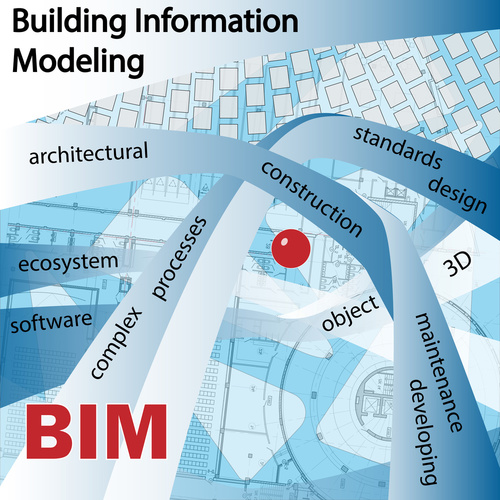
BIM basically stands for 3D Models containing the Information of a Building. Some think BIM is only a software tool for planning 3D buildings, similar to Revit, ArchiCAD or others. In actual fact, BIM does much more. It is a work method, a construction project planning and realisation concept. BIM is based on the active network of all of the people (companies) involved in the construction process. It is a sort of digital planning table, which should accompany all of the parts (companies) involved in the project. Long before construction actually starts, BIM can help avoid budget problems and planning mistakes.
So how does it work?
One could say that the building is built twice: digitally, during the planning process, and concretely by all of the companies involved in the building’s construction. This means that all of the companies involved in the project provide their planning and their offers. The architect receives the costs, all of the main technical parameters and the 3D models of the specific parts of the building. This means that the architect, during all planning and execution phases, has a complete overview and control of the building’s geometry and of all construction costs and timing. Once construction is completed, this information is used to manage maintenance more efficiently.
Which are the solutions developed by Orgadata?
For BIM, Orgadata has developed two tools:
1. a plug-in in Revit environment for the architect, that should be the key of the BIM process, called “Simple As BIM”. The plug-in is created together with the door and window system producer to enter the library of the various systems. The door and window system producer will then distribute the plug-in to the architects and to the design firms;
2. a plug-in for the LogiKal software called “BIM Module” that allows to import the projects from the Revit-BIM environment to the LogiKal environment and vice versa.
Obviously, the two tools can be used in combination, as recommended, to gain excellent savings in time and a higher degree of project profitability.
Which are the practical advantages in using BIM?
Without a doubt, BIM can help in avoiding budget problems and planning mistakes because, as previously mentioned, it receives in advance all of the costs, the technical parameters and the 3D models of the corresponding parts of the building. Via the Orgadata solution, the architect and the profile manufacturer can easily exchange information. This results in higher efficiency (the exact quantities, the dimensions and the actual prospects of the positions are available in LogiKal), time saving and no mistakes.
What are the implementation times of BIM and what are its most significant cost items?
The door and window system and façade producers working with LogiKal and the BIM Module can immediately participate in the BIM process. If the architect is working with our Simple As BIM, he/she exports the project made in Revit environment and sends it to the system producer, providing a project that already has all of the external positions and dimensions, the types of apertures and much information regarding the systems (series, glazes, thermal transmittance values, colours, etc., namely all of the information that the door and window system producer has put in the plug-in).
With the BIM module of LogiKal, a door and window system producer can open this still incomplete project, read all of the information listed above, examine it and add to it all of the information necessary for the construction of all of the types. In this way, a finished LogiKal project is obtained with all of the materials and a commercial offer that can be exported into Revit, where the architect can then use the 3D model and all of the corresponding information (costs, production time, etc.).
This procedure provides great advantages in project realization time that in turn produce economic advantages (instead of costs).
The Minister for lnfrastructures and Transport, Mr. Graziano Delrio, has declared that BIM will become mandatory in the new Code of Tendering, bringing economic and timesaving advantages to the Public Administration. This is a further incentive for door and window system producers and façade producers to learn about the topic and prepare for change. What would you suggest?
All we can suggest is that they work with partners (door and window system producers) who have integrated Simple As BIM into their systems, and that they use LogiKal with the corresponding BIM module to improve data exchange with architects and designers.
What opportunities can BIM offer companies producing doors, windows and façades?
The participation in larger projects: the user with LogoKal’s BIM module is capable of participating in those projects where BIM processing is mandatory without having to possess extensive knowledge of CAD processing (Revit or ArchiCAD).
Greater safety: mistakes in the transmission of dimensions or caused by the lack of information regarding changes are practically excluded when working with BIM.
By using the BIM module, most of the doors and window system producers’ workload is eliminated because the information regarding the various elements are already completed via the transfer of the BIM project into LogiKal. The result is an enormous saving in time and very high design reliability levels, because the testing of the model’s dimensions and quantities has already been performed by the architect.
In your opinion, what will the future scenario be like?
For quite a few years now, the planning of medium- and large-size projects using BIM has been standard practice in the United States. In European countries, such as The Netherlands and Norway, BIM has become increasingly popular in the public sector, and in the UK it has become mandatory since 2016.
I think the time has come for Italy to follow in their direction, and it will take a lot of work in order to spread the concepts and the necessary tools. Orgadata has been at the front since the beginning of this latest market evolution and is ready to play its role as divulgator of innovation tools to all of the sector’s players.